Block Party | Civic Tech Mobile App
Reimagining civic participation through interactive urban design
A gamified mobile experience that empowers residents to visualize neighborhood changes, propose ideas, and shape the future of their communities.
Overview
Bloomington’s public input process for urban planning projects relied on newsletters, surveys, and council meetings, yet many younger residents were unaware of opportunities to participate. Research with residents and city planners led me to focus on civic-oriented residents aged 18–35 and make urban proposals easier to understand and respond to.
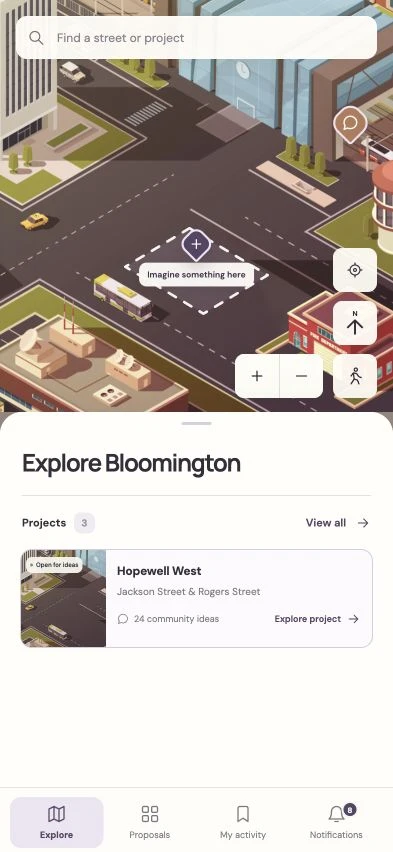
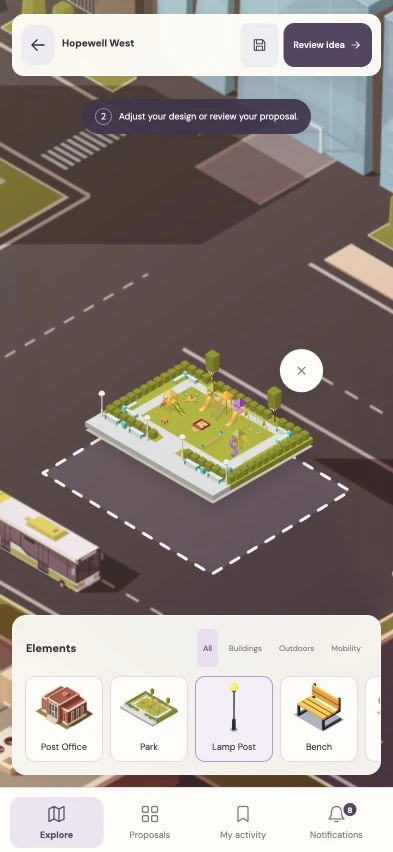
Working with the City Council of Bloomington, Indiana, I developed Block Party, an interactive community planning mobile app. Its visual planning sandbox lets residents arrange predefined features such as parks and bike lanes, create proposals, vote, and share feedback—making neighborhood planning more accessible.
The Problem
A proposal cannot invite input if people cannot picture it.
Bloomington’s existing input channels included newsletters, surveys, council meetings, and design presentations. Research exposed gaps in awareness, convenience, and visual context. I narrowed a broad urban-design ambition to community projects and civic-oriented residents aged 18–35.
- 01 · DiscoverHear about a project
Low awareness kept residents out of the conversation.
- 02 · UnderstandPicture the change
Proposals were difficult to visualize in context.
- 03 · ContributeMake an opinion useful
Input could arrive too late or be misinterpreted.
How might we help younger residents understand neighborhood changes and contribute ideas that planners can interpret?
| Evidence | Design implication |
|---|---|
| Low awareness and inconvenient participation. | Let residents explore projects beyond a meeting. |
| Proposals shown without enough spatial context. | Locate a proposed change in its neighborhood. |
| Feedback could be misinterpreted. | Pair comments with visual ideas and project context. |
Research Insights
A narrower problem made meaningful participation possible.
My architecture work in India and experiences as a pedestrian in Bloomington raised the same question: how can residents help shape the places they use? I studied participation approaches, then investigated how Bloomington gathered public input.
- Secondary research
- Research papers, articles, and case studies helped me compare outreach methods, design approaches, and reported participation outcomes.
- Digital ethnography
- I reviewed Reddit threads, public forums, and government websites to understand how people encountered and discussed community projects.
- Stakeholder interviews
- 4 planning interviews and 6 resident interviews brought together the perspectives of Bloomington planners and civic-oriented community members.
- Contextual observation
- I attended City Council meetings and mapped the existing public-input process with planners and other stakeholders.
Understanding the current system
Input came through newsletters and online surveys, public council meetings, and design presentations for larger projects. Interviews revealed that residents often did not know meetings were happening. Attendance represented only a small part of the community, while the effort involved discouraged participation.
What kept people out
- Awareness comes before access. Poor outreach and inconvenient participation methods left younger and marginalized residents out of the conversation.
- Feeling heard affects willingness to engage. The literature connected unheard community voices with distrust and disengagement; participation needed a clearer sense of purpose.
- One approach cannot fit every community. Different places and project types called for context-specific methods. Participatory workshops and interactive platforms offered promising directions.
- Resources shape whose input is considered. Tight timelines and limited capacity could leave public involvement overlooked, despite its importance to long-term project sustainability.
Concept Evaluation
Keep the context of a place. Add the freedom to propose.
A co-design workshop with four participants explored three directions. After designing and evaluating paper concepts with two city planners and two users, I developed a visual planning sandbox: contextual feedback plus a way to arrange and share ideas.
Build together, in person.
Residents arrange physical building blocks on a shared neighborhood scale model at an on-site kiosk.
Overlay a proposal on a place.
An AR concept connected feedback to a resident’s view of the physical site.
Explore, respond, and create.
A virtual neighborhood combined proposal feedback with resident-built ideas in one experience.
Testing & Iterations
Testing made choice and feedback the next priorities.
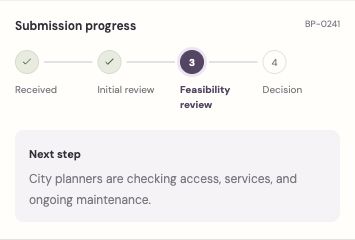
Six Bloomington residents tested the initial MVP. Their feedback shaped clearer building choices and placement feedback. Additional feedback highlighted the need to know whether submissions were being considered, leading to a visible progress tracker.
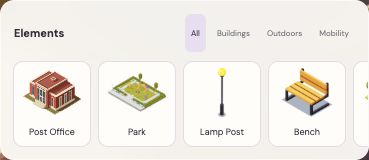
- Choosing an element
- FeedbackPrefab elements needed clearer organization.
- ChangeBuildings, Outdoors, and Mobility categories organize the library.
-
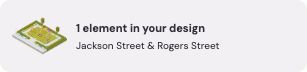
- Recognizing a result
- FeedbackA new design’s arrival in the plot needed emphasis.
- ChangePlacement feedback and a design preview make the result visible before submission.
-
- Following a submission
- FeedbackResidents wanted to feel acknowledged and know their ideas were being considered.
- ChangeA progress tracker shows review stages and the next step, so a submission does not feel lost.
-
Final Solution
Explore, propose, and follow what happens next.
Block Party brings project discovery, visual proposal-making, and community feedback into one mobile experience. Residents explore neighborhood projects, switch to street view, compare proposals, and add their votes and comments.
The builder offers categorized features to arrange on a site, with a design preview, saved drafts, supporting references, and a submission form. My Activity brings drafts and proposals together; notifications and the progress tracker show responses, review stages, and next steps.
Explore
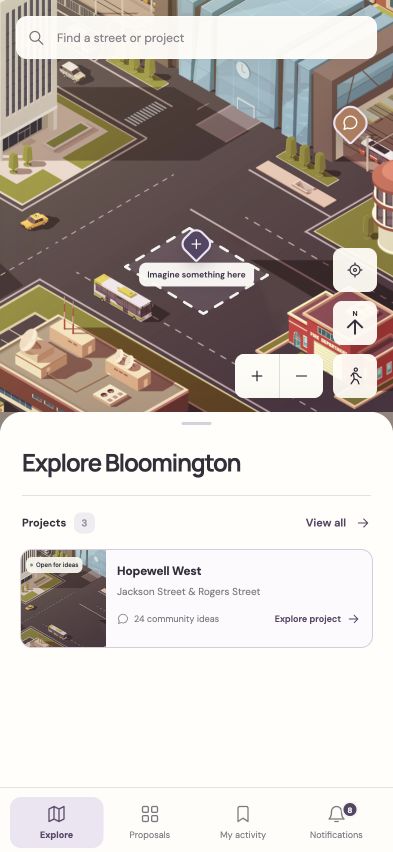
Discover nearby projects on the neighborhood map.
Project Details
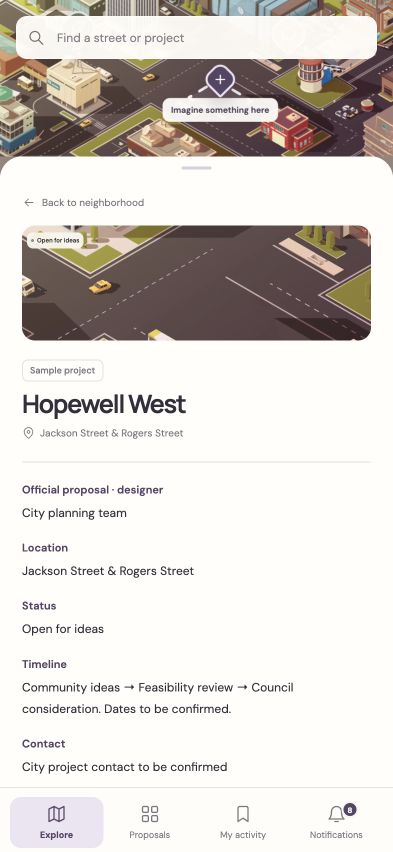
Read a project’s location, status, context, and planning timeline.
Street View
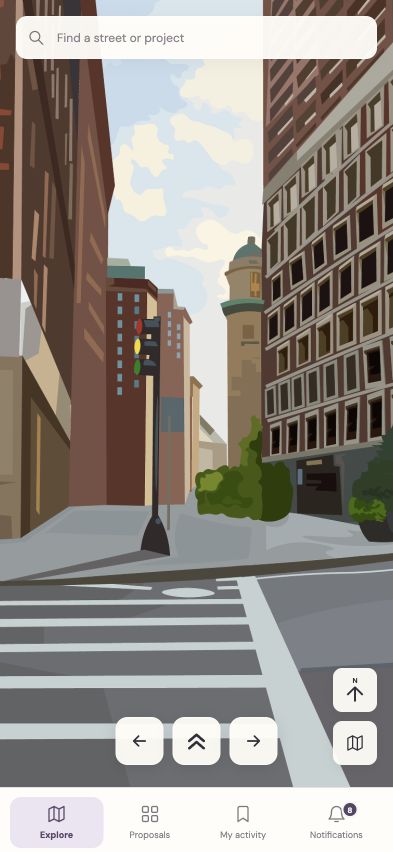
Switch from the city map to an illustrated street-level view.
Community Proposals
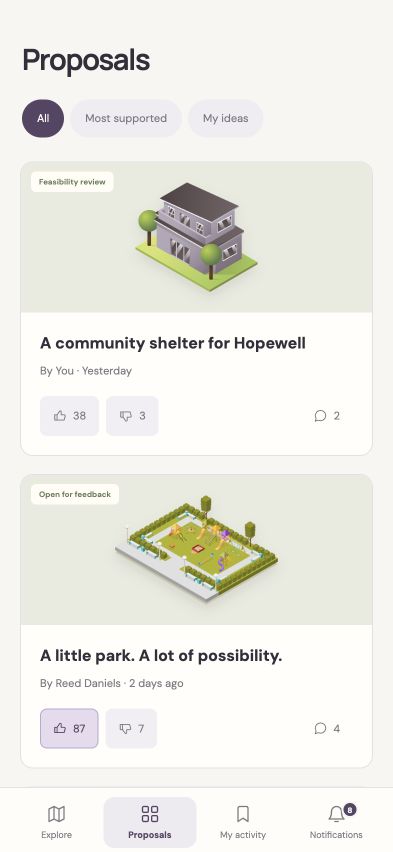
Browse ideas and filter by support or your own submissions.
Comments & Votes
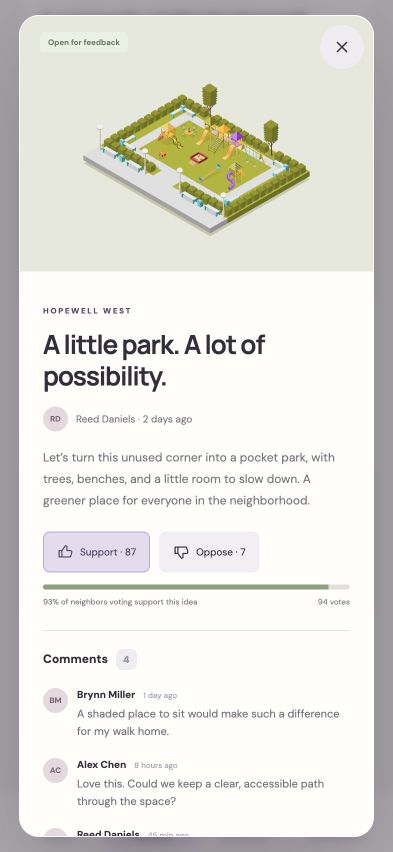
Support or oppose a proposal, read comments, and contribute feedback.
Visual Builder
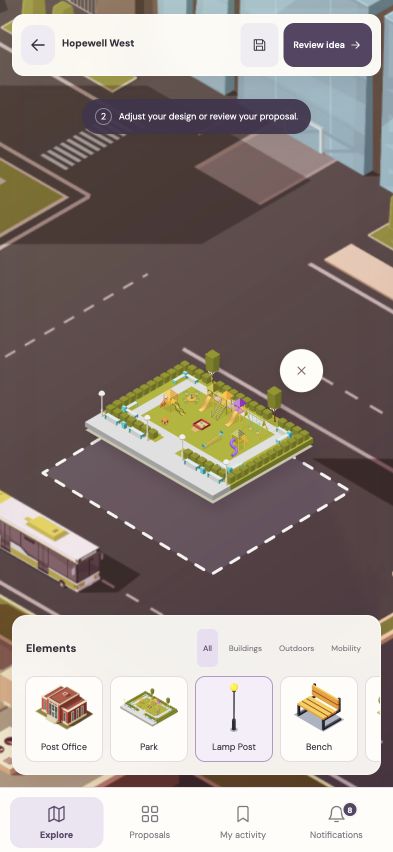
Look through prefab elements in Buildings, Outdoors, and Mobility categories to propose.
Categorized Elements
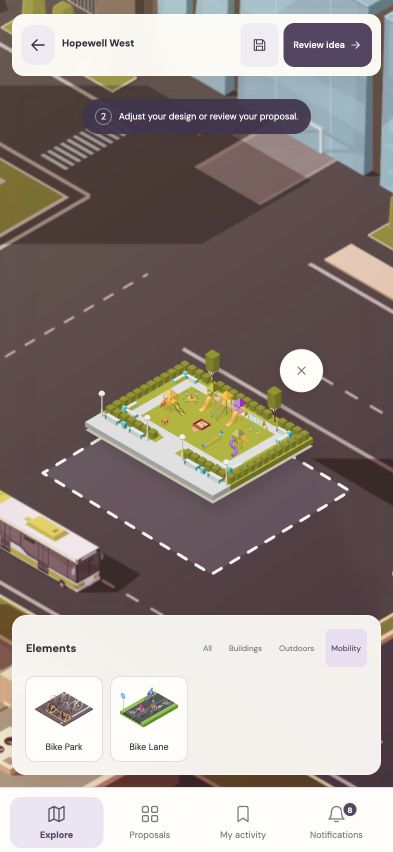
Drag and drop selected elements into active project plots to propose your ideas.
Review & Submit
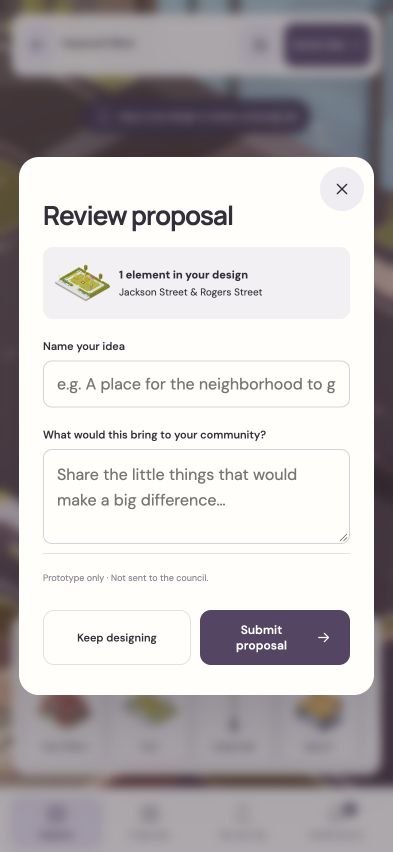
Preview your design, name the idea, and explain its community value.
Supporting References
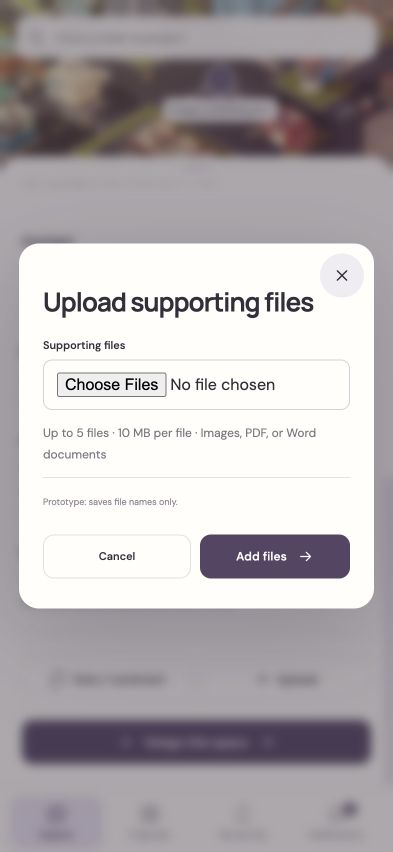
Add visual inspiration or documents alongside a project idea.
My Activity
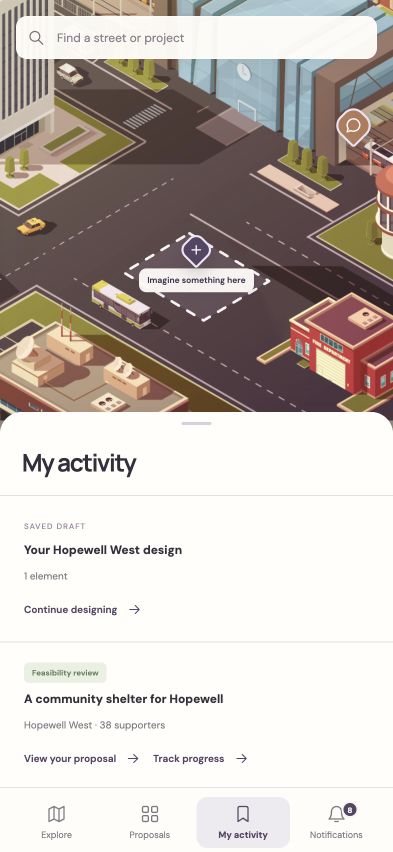
Revisit drafts, continue designing, and find your submitted proposals.
Notifications
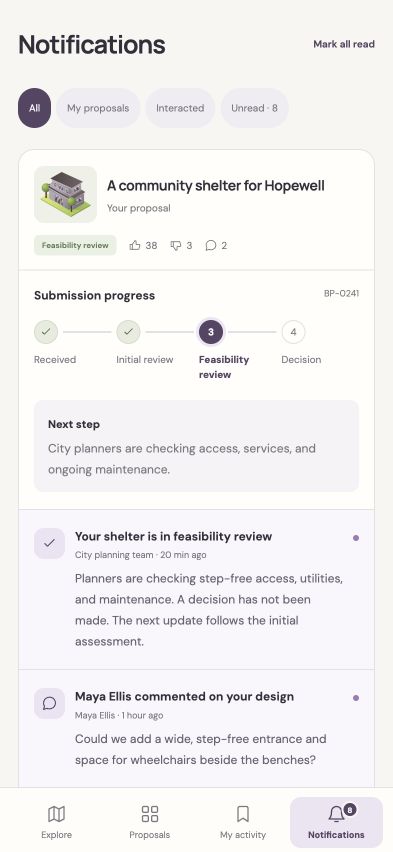
Follow planner messages, community responses, and unread updates.
Progress Tracker
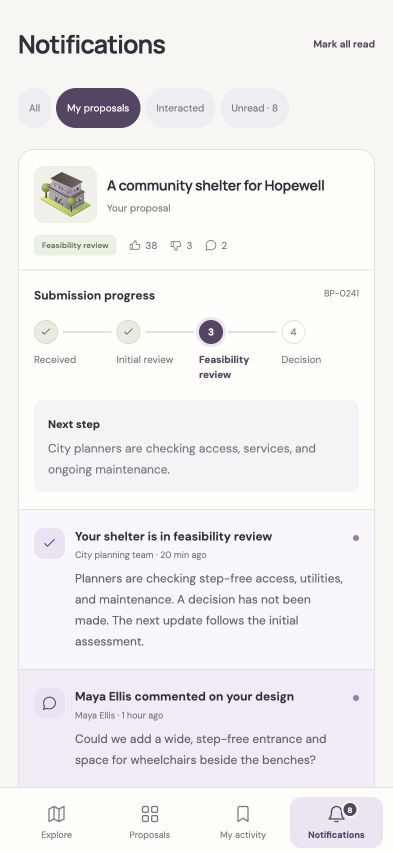
See the submission’s review stage and what happens next.
Try the mobile prototype
The Impact
Making participation more accessible.
In beta testing with 30 Bloomington residents, proposal submissions reflected a reported 42% increase in community engagement compared with previous participation patterns. The visual planning sandbox gave residents a more accessible way to contribute ideas.
Reflections
Two lessons I’ll take forward.
Understanding why users disengage is as important as understanding what they need.
This project taught me to look beyond surface-level usability challenges and understand the motivations behind user behavior. Through research, I realized that limited civic participation wasn't simply an accessibility problem, but also one of awareness, trust, and perceived impact. This reinforced the importance of uncovering the root causes of disengagement before designing solutions.
Giving users creative freedom requires thoughtful constraints.
Designing the visual planning sandbox challenged me to balance creative freedom with usability. By introducing predefined design elements, I explored how thoughtful constraints could make complex urban planning concepts approachable to people without technical expertise. I learned that empowering users isn't always about offering more options, but making meaningful participation easier.