iHeart Media | Audio Streaming Mobile App
Making digital audio more personal and interactive for the next generation of listeners
A redesigned listening experience that simplifies onboarding, personalizes discovery, and brings listeners closer through social interactions.
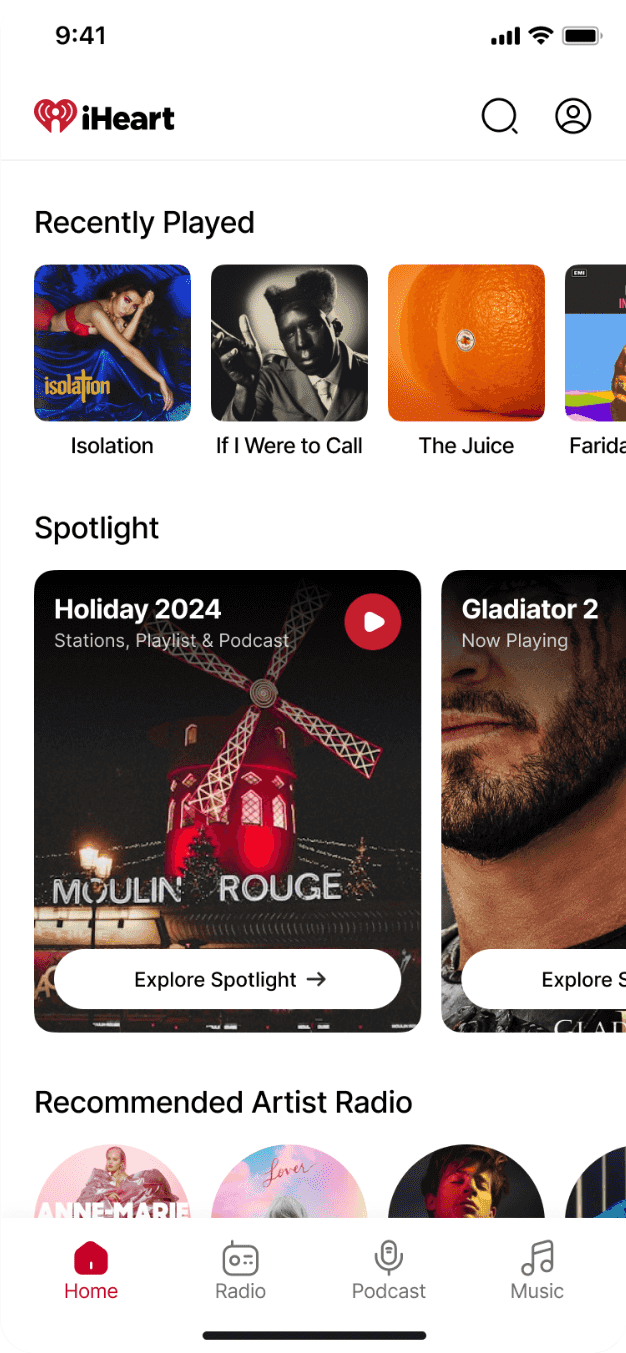
Overview
iHeart Media struggled to retain listeners under 35. An 82% onboarding drop-off rate, navigational friction, and limited social connection pointed to an experience that felt demanding and impersonal. Our studio team combined interviews, review analysis, and heuristic evaluation to focus the redesign on navigation and community.
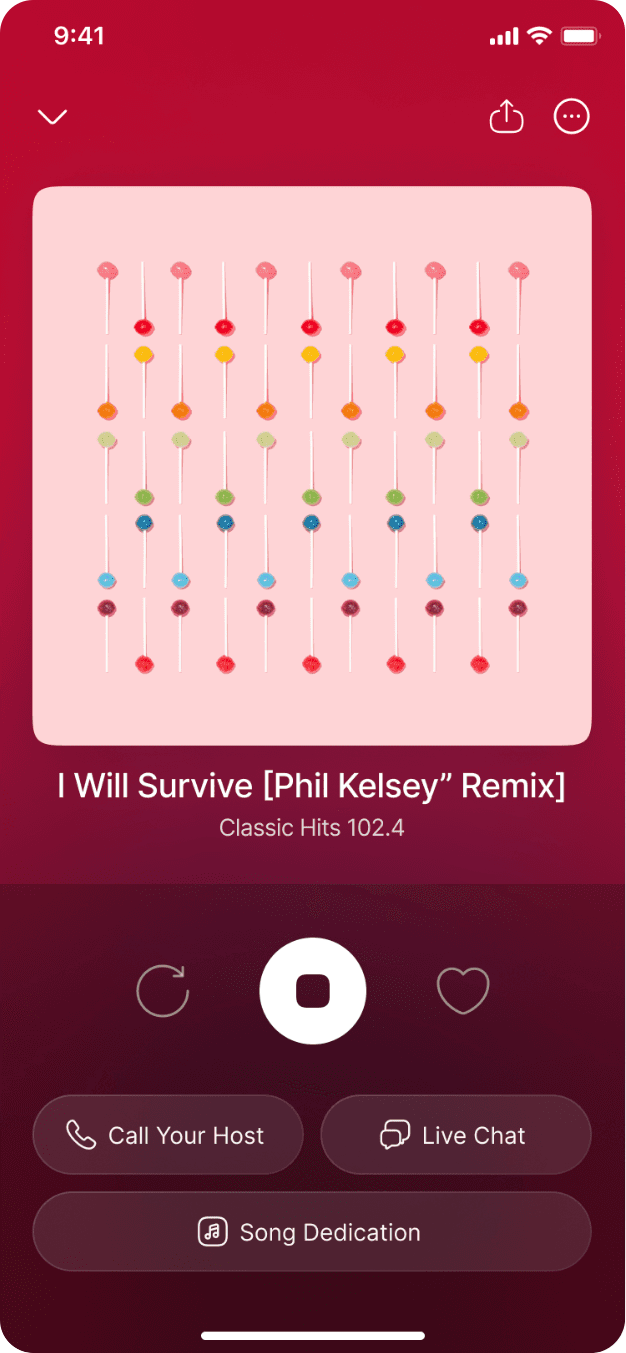
I facilitated the team’s work and pitched and owned Song Dedication. Together, we streamlined onboarding to get listeners to music faster and introduced Call Your Host and Song Dedication to bring the intimacy of live radio into the app. Usability findings also guided clearer location settings and playback feedback.
The Problem
Getting to the music took effort. Connection stopped at playback.
For a new listener, creating an account was only the beginning. The team found friction in onboarding and navigation, followed by an experience with few opportunities for personal connection. We needed to make listening easier to start and participation easier to understand.
- 01 · Get startedAnswer onboarding questions
Length and relevance could discourage new listeners.
- 02 · ExploreFind something to hear
Complex navigation made features difficult to discover.
- 03 · Manage listeningFind settings and controls
Hidden location settings and ambiguous actions added friction.
- 04 · ParticipateLook for a human connection
Listening offered limited two-way interaction.
How might we help younger listeners start listening with less effort and participate without losing the simplicity of audio?
Research Insights
Research pointed to clarity and connection.
5 interviews500+ reviewsHeuristic evaluation
We combined listener interviews with Reddit and App Store reviews and an evaluation of the existing experience. The synthesis brought three design implications into focus.
| Evidence | Insight | Design implication |
|---|---|---|
| Onboarding questions and flow created difficulty. | The first session needed less effort. | Clarify questions and remove unnecessary steps. |
| Navigation and controls were hard to understand. | Useful features needed more visible entry points. | Surface settings and explain actions. |
| Interview feedback expressed a desire for human interaction. | Connection mattered alongside content. | Explore dedications and episode-level participation. |
Concept Evaluation
Explore widely. Focus on a more personal listening experience.
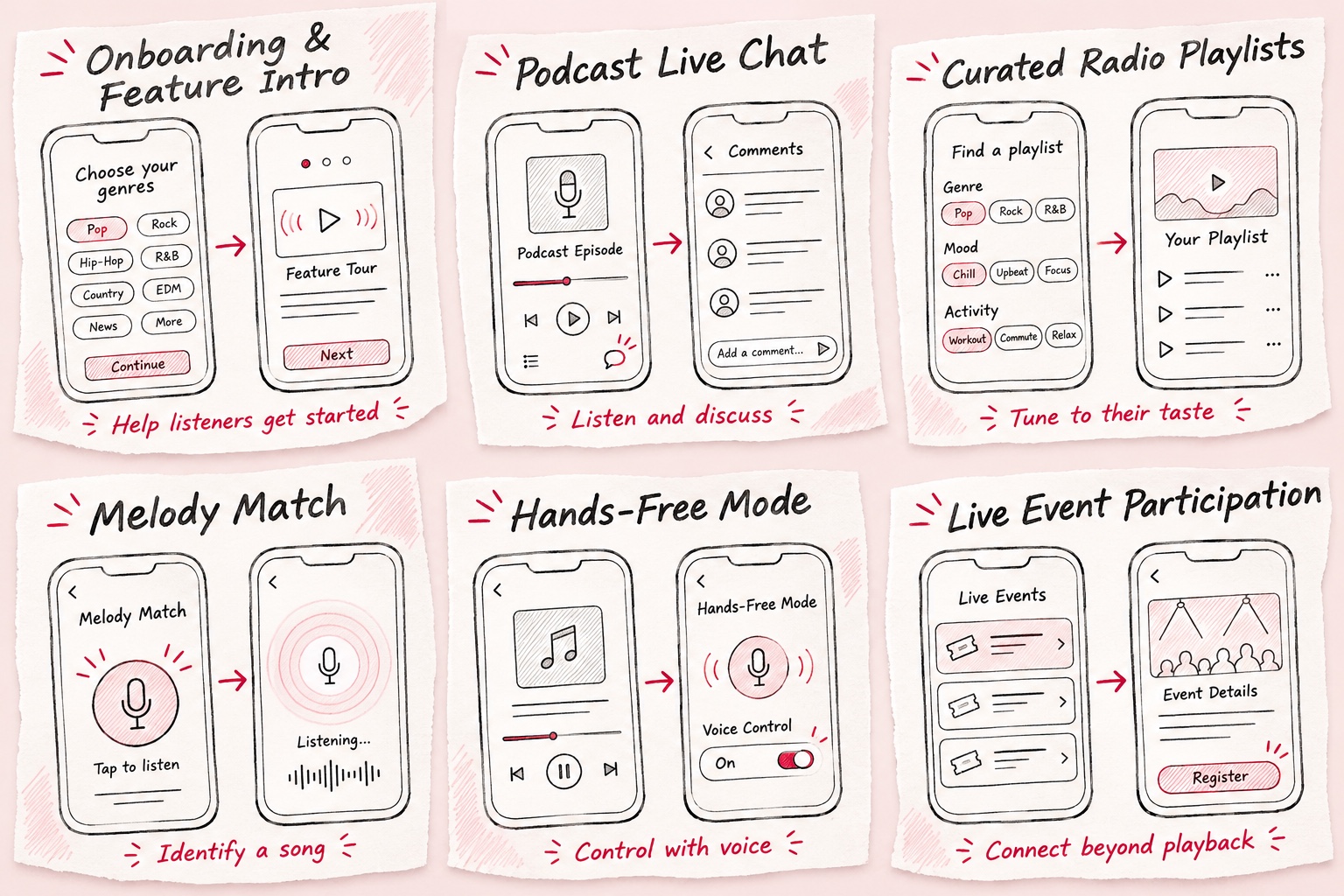
We explored six ways to help younger listeners get started, discover relevant content, and connect: onboarding and feature introductions, podcast live chat, curated radio playlists, Melody Match, hands-free mode, and live event participation.
Prototype Focus
We reviewed the concepts with our sponsors, weighing feasibility, potential impact, and fit with user and business needs. We narrowed the prototype to simpler onboarding, more personal discovery, and social features that bring listeners closer.
- Onboarding
- Remove unnecessary screens and make setup questions more relevant, so listeners can get to music faster.
- Personalization
- Bring liked and downloaded content into My Library, with access to genre and artist preferences.
- Call Your Host
- Give listeners a direct way to join an on-air discussion with the show’s host.
- Live Chat
- Connect listeners through conversations around the current radio program.
- Song Dedication
- Let listeners dedicate a song and send a personal message to someone special.
Testing & Iterations
Testing changed where controls lived—and what they said.
In usability sessions with 10+ users, we observed independent app exploration, including onboarding. We looked for confusion, frustration, and unmet expectations. Two findings led to more visible settings and clearer playback feedback.
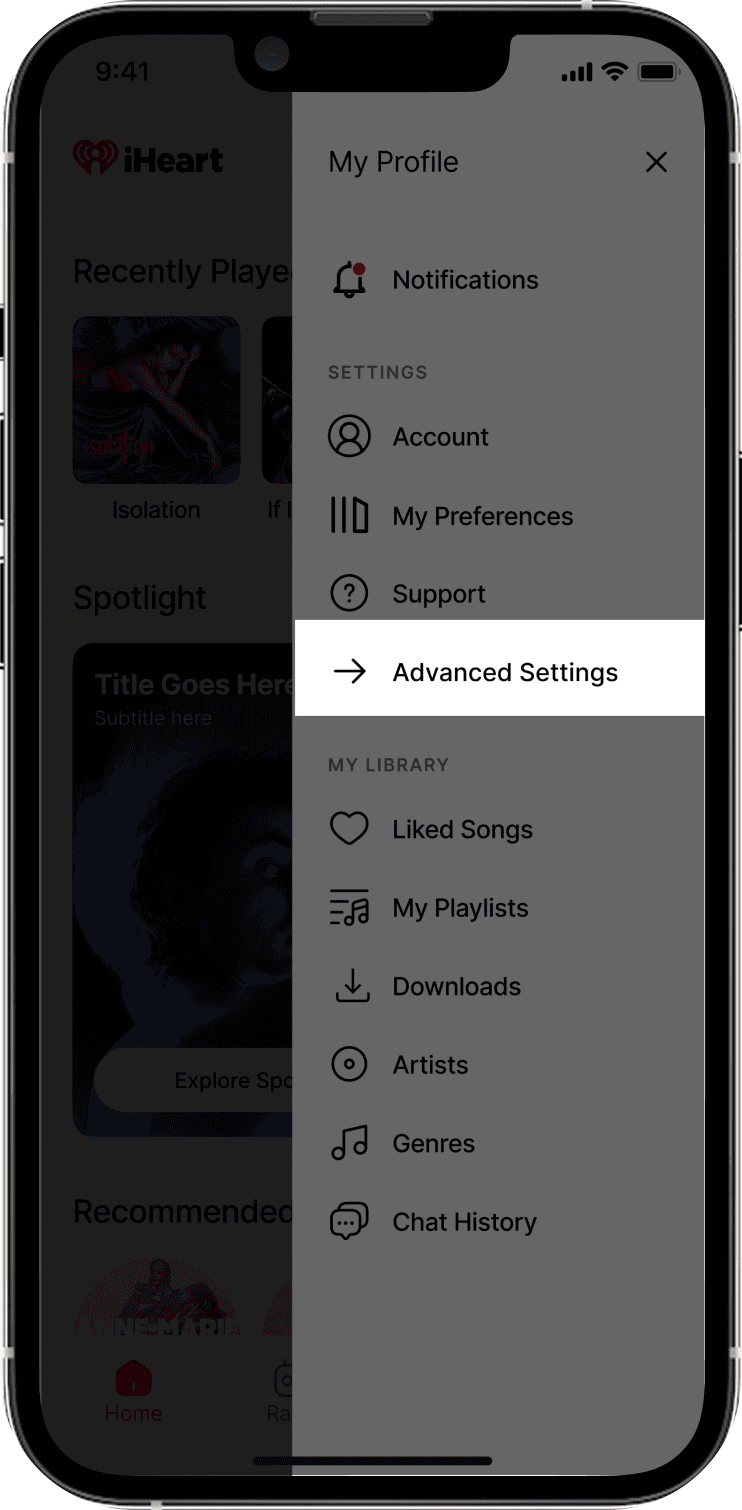
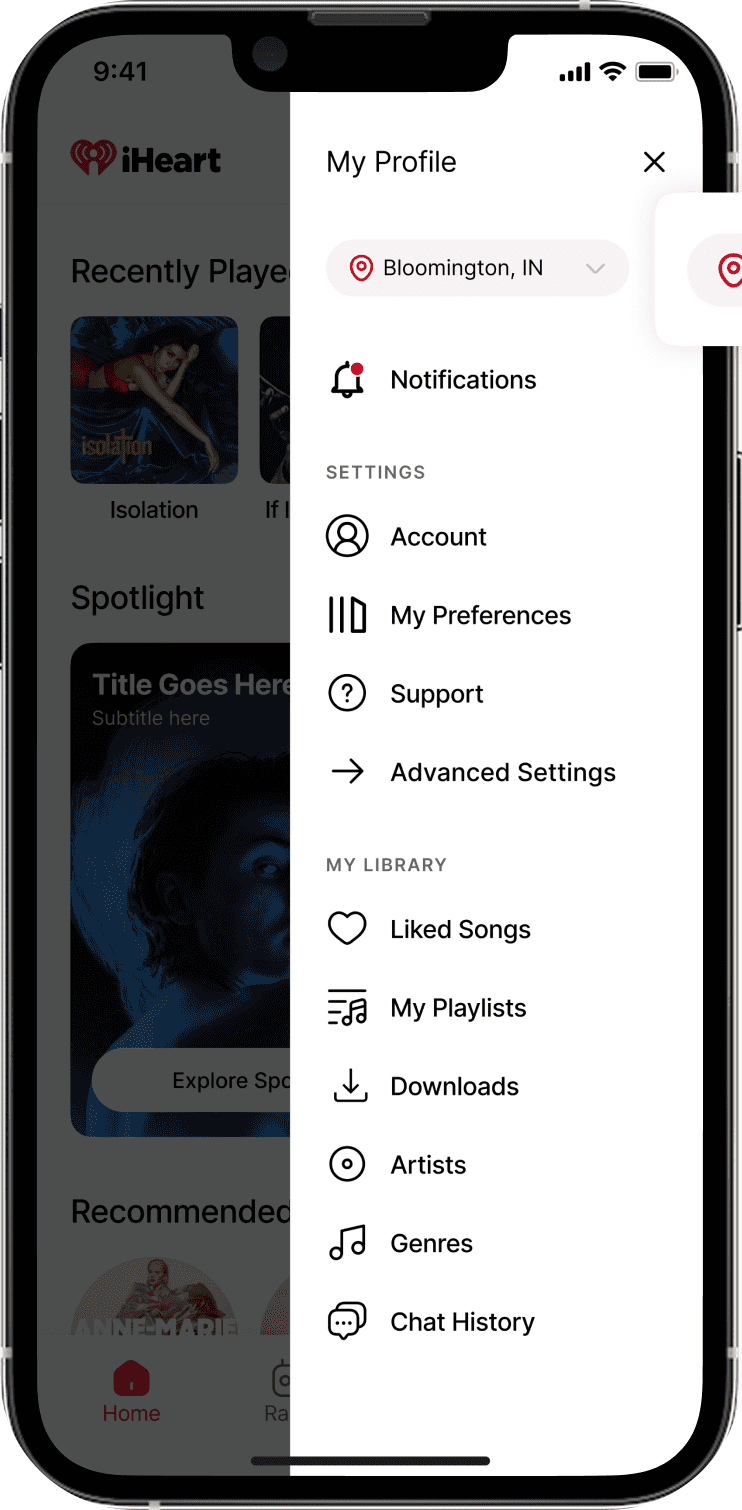
Put location where listeners looked for it.
- Initial approach
- Location was nested under Advanced Settings.
- Testing finding
- Listeners expected it in account or profile settings.
- Design change
- Surface location selection directly in the profile.

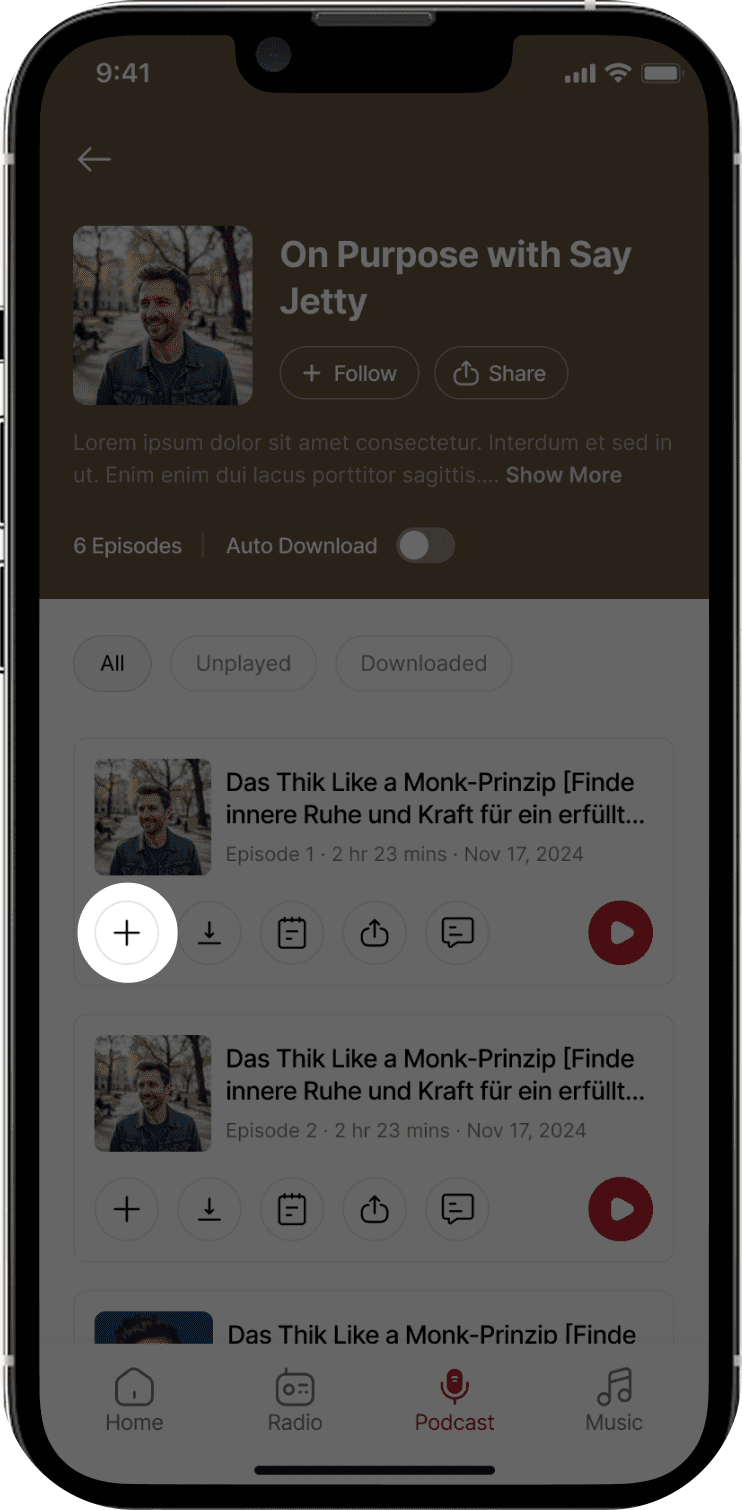
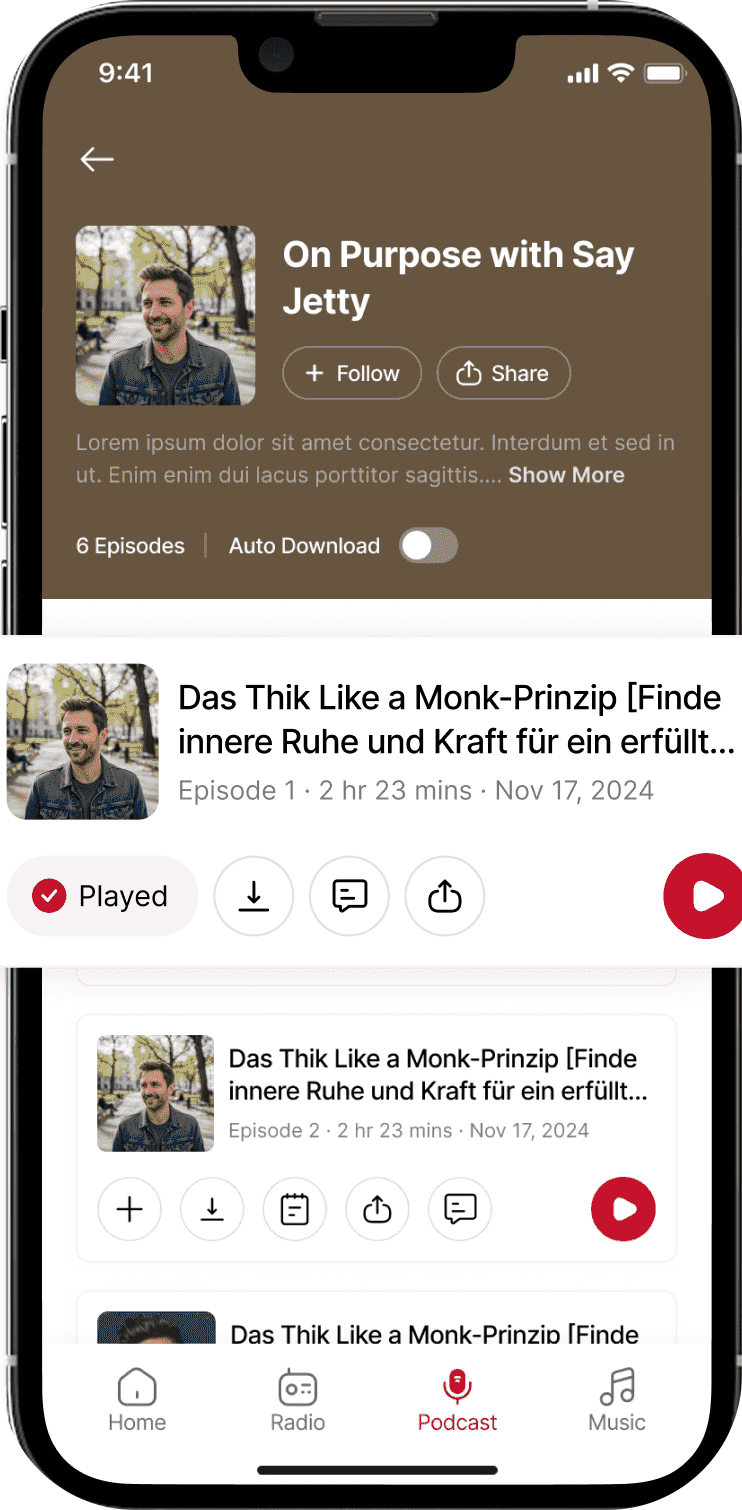
Name the action instead of asking people to infer it.
- Initial approach
- An unlabeled plus action marked an episode played.
- Testing finding
- The meaning of the episode controls was unclear.
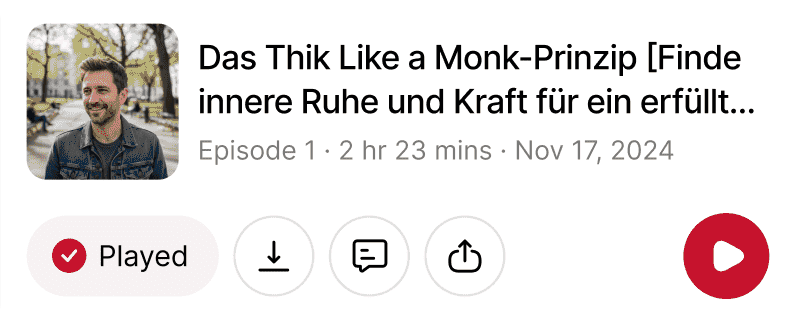
- Design change
- Add explicit Played feedback to the action row.
Final Solution
Three ways into a more connected listening experience.
The prototype links easier entry with ways to participate alongside the audio. Play each original interaction below; these are recorded prototypes, not a live service.
Start with relevant preferences.
Clearer questions guide location and genre choices, helping listeners shape their experience before the first session.
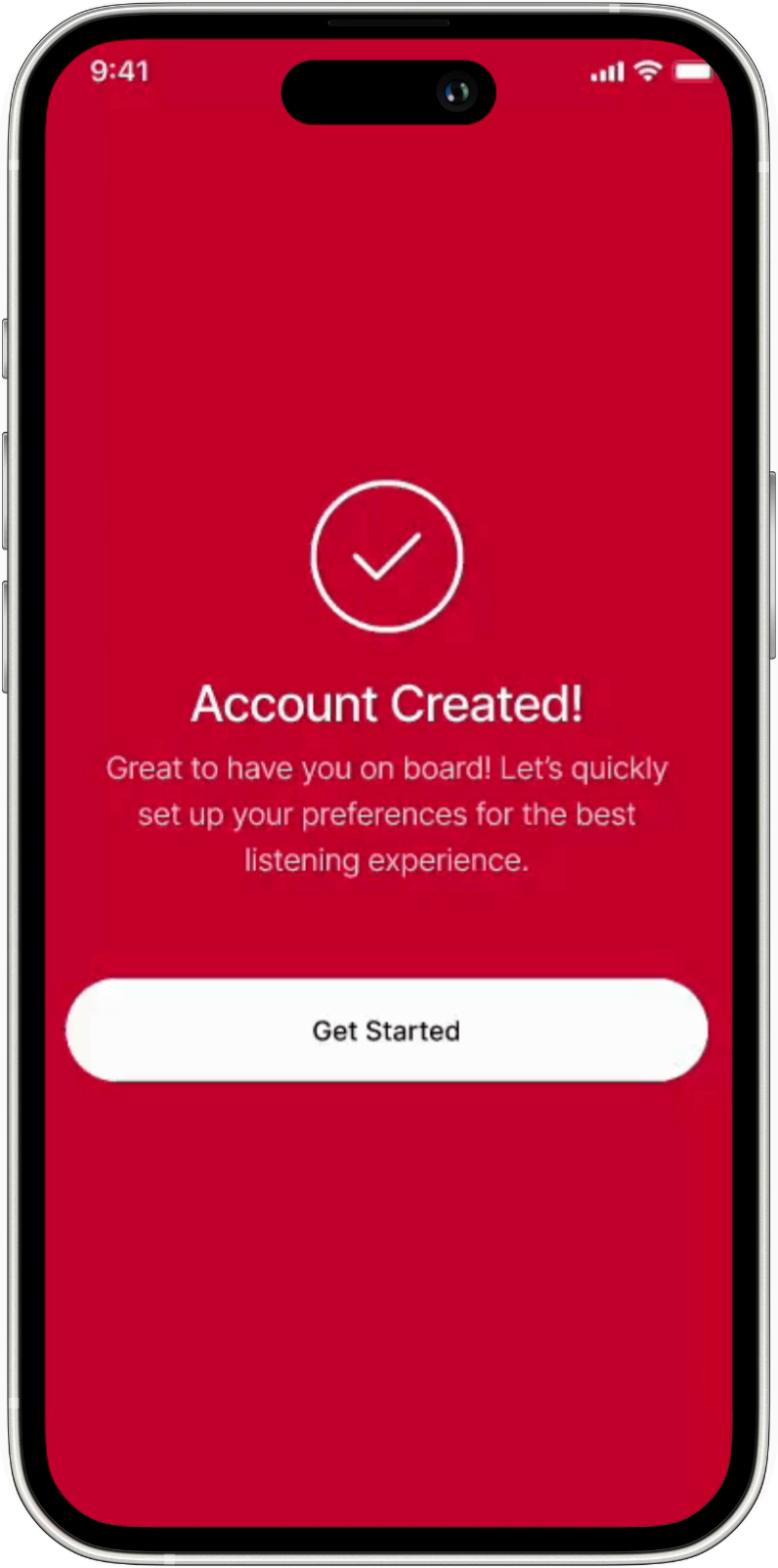
Text Walkthrough
- Start from account confirmation.
- Enter listening location and choose genres.
- Finish setup and start listening.
Make a song personal.
I pitched and owned song dedication: a personal song-and-message flow, with confirmation that the request was sent.
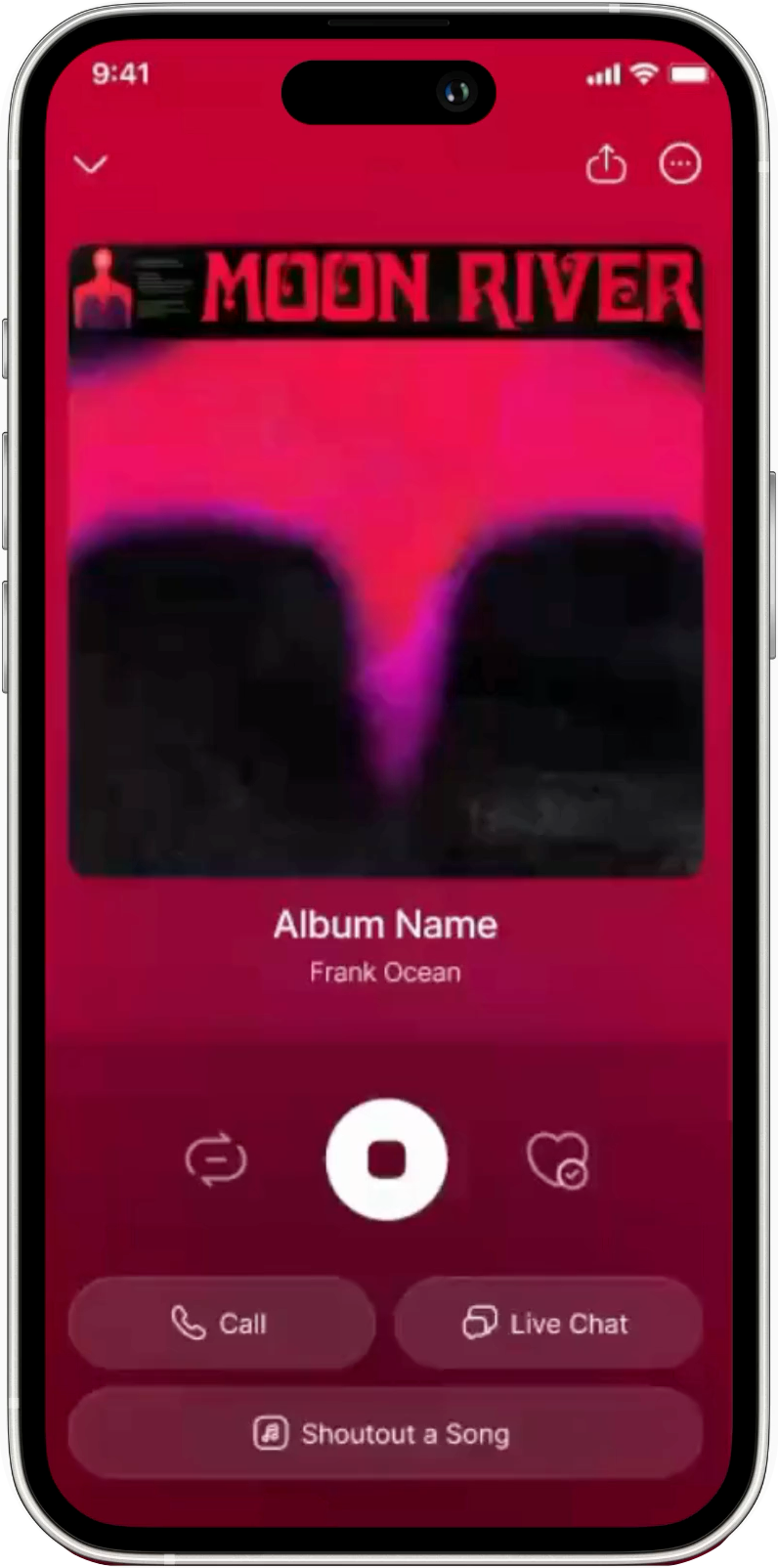
Text Walkthrough
- Open Shoutout a Song from the player.
- Add sender, recipient, song and message.
- Submit and see request-sent feedback.
Respond to an episode.
Episode-level polls and comments give listeners a concrete way to participate in the conversation around the content.
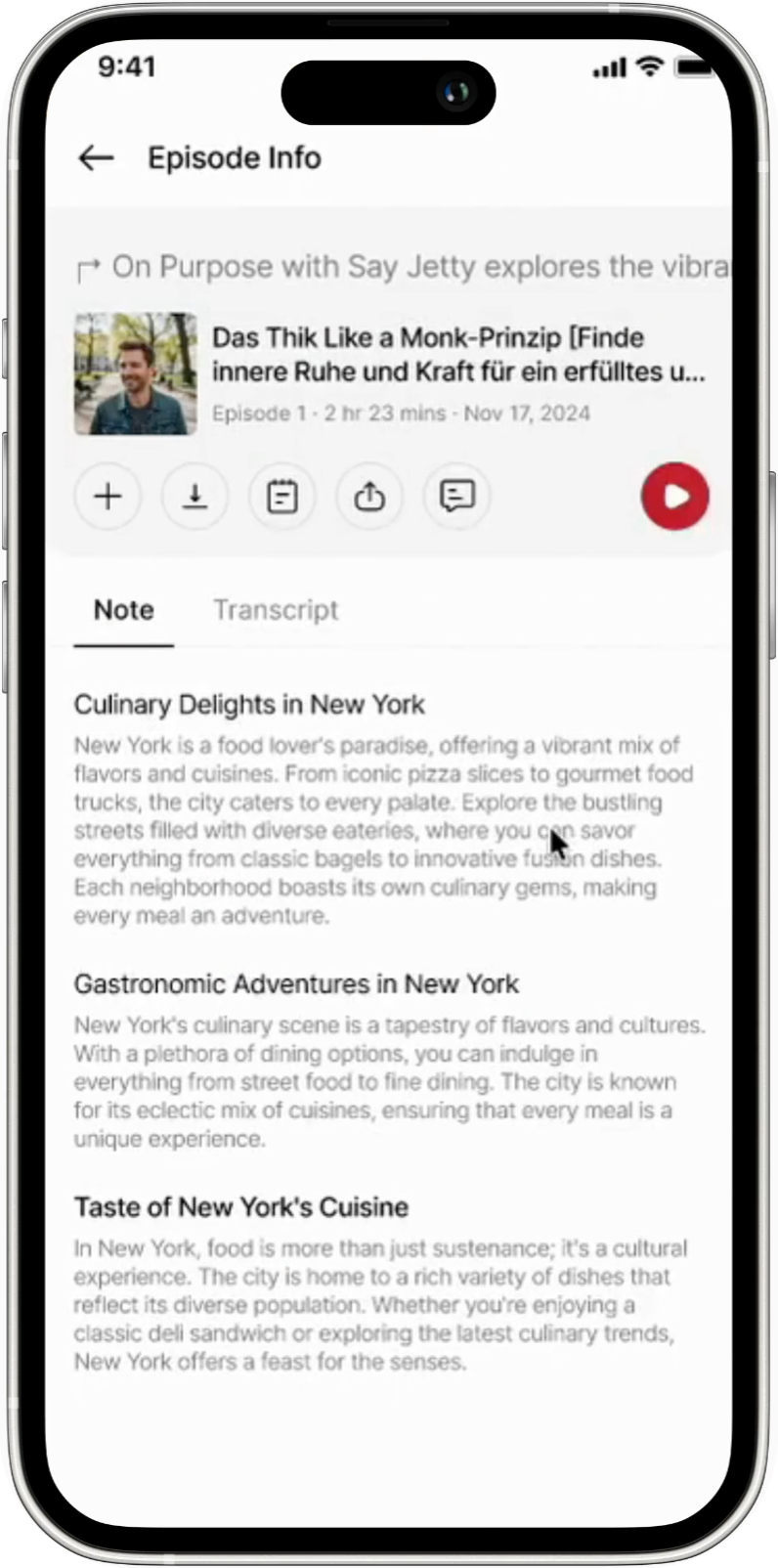
Text Walkthrough
- Open the episode detail.
- Visit its poll and comments.
- Select a poll response and explore discussion.
The Impact
A more engaging listening experience.
Online user testing with 45+ users showed an 18% increase in content engagement, contributing to longer listening sessions. Clearer onboarding and opportunities to participate helped make the experience more personal.
- Observed changes
- Location surfaced in profile; Played state made explicit.
- Demonstrated scope
- Onboarding, song dedication, and podcast participation.
- Validation
- Online user testing with 45+ users.
Reflections
Participation needs a clear path and an operational owner.
This project sharpened how I think about social features: entry points, feedback, and operational support need to be designed together. A dedication form can look complete while leaving questions about which songs people can choose or what happens next. I would next test those expectations and the revised controls with new listeners, then work with product and research partners on privacy and moderation requirements. That would give the team stronger evidence before expanding the experience.